
Family Routines
Should kids have phones in their bedroom at night?
The evidence points one way, but a blanket ban is not the only option and often not the workable one. What the phone in the bedroom actually costs, and three arrangements families use instead.
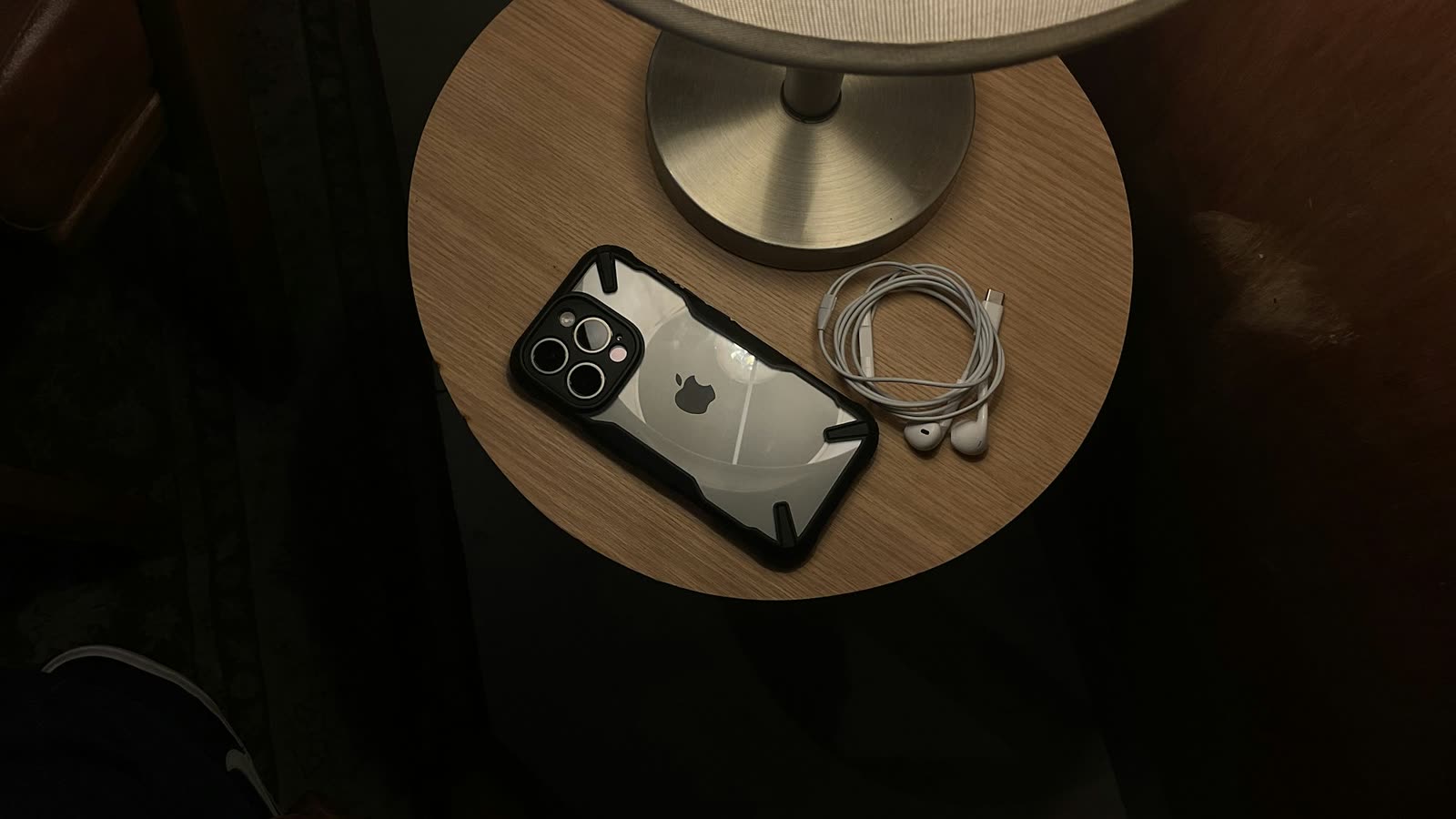
The short answer: for most children, no — the phone is better charging somewhere else overnight. Paediatric guidance is consistent on keeping screens out of the room where a child sleeps, and the reason is less about blue light than about the fact that a phone within reach converts every ordinary night-time waking into forty minutes of scrolling. But a confiscation policy imposed on a teenager who has had the phone in their room for two years usually fails. The arrangement matters as much as the rule.
Key takeaways
- The problem is availability, not light. A phone in reach turns normal night-time wakings into long ones. That effect is larger than the blue-light one and much easier to fix.
- Where it charges is the whole policy. Families who solve this mostly solve it by moving the charger, not by adding a rule.
- Make it apply to everyone. A rule that governs the eleven-year-old but not the adults reads as a punishment rather than a household norm — and it will be argued as one.
- Negotiate the alarm clock first. "I need it to wake up" is the most common objection and the easiest to remove, for the price of a cheap clock.
Isn't this just about blue light? Only partly. Screen brightness has a real but modest effect on melatonin. The bigger cost is that engaging content delays sleep onset and a reachable phone fragments the night.
What if my teenager flatly refuses? Then negotiate the charging location rather than the ownership. A phone charging on a desk across the room concedes almost nothing and removes most of the harm.
What the phone in the room actually costs
Three distinct effects, worth separating because they have different fixes:
- Delayed sleep onset. Interactive, socially rewarding content is genuinely harder to stop than television. The child intends fifteen minutes and surfaces an hour later.
- Fragmented sleep. Everyone wakes briefly several times a night. Without a phone, those wakings are forgotten by morning. With one, some fraction become a scroll.
- Anticipatory alertness. A phone that might buzz keeps a part of the brain listening for it. Do Not Disturb helps here and is worth turning on regardless of where the phone sleeps.
Major paediatric bodies — including the American Academy of Pediatrics — have long recommended keeping screens out of children's bedrooms overnight, and that advice has not softened as phones have got better at managing their own brightness. That should tell you which of the three effects is doing most of the damage.
Why a blanket ban often backfires
Announcing that phones now leave the bedroom, effective tonight, tends to fail for reasons that have nothing to do with sleep science:
- It arrives as a loss. Something the child had is being removed, with no exchange. That framing invites resistance regardless of how good the reasoning is.
- It is unenforceable in a closed room. Any rule that depends on you not checking is a rule your child gets to decide about privately, every night.
- It usually excludes the adults. Children are unusually alert to this, and a household norm that only governs the shortest people is not a norm.
The households that manage it well tend to change the default rather than police the behaviour — which is the same reason a visible chore list outperforms verbal reminders, covered in getting kids to do chores without nagging. Make the desired thing the path of least resistance and you need far less enforcement.
Three arrangements that work
| Arrangement | How it works | Best for |
|---|---|---|
| Family charging station | All phones, adults included, charge in one place overnight | Under-13s, and households that can genuinely include the adults |
| Across-the-room charging | Phone stays in the bedroom but charges out of reach of the bed | Teenagers, and as a step down from a full ban |
| Scheduled shutdown | Phone stays put but closes itself at a set time each night | Households where confiscation has already become a fight |
The middle option is the underrated one. It concedes the argument about ownership and privacy while removing most of the mechanism — because the cost of getting out of bed is enough friction to stop the 2am scroll that a bedside phone makes effortless.
The alarm clock objection
"I need my phone to wake up" is the objection you will hear, and it is worth taking at face value rather than treating as a debating tactic. It is also the cheapest problem on this list to solve.
Buy an alarm clock. Let the child pick it. The objection disappears, and with it the strongest argument for the phone staying within arm's reach — which is exactly why it is worth removing before any of the harder conversations start.
Make the wind-down start earlier than the rule
A phone that leaves the room at bedtime is still in the room for the hour that matters most. The last hour before sleep does more to determine how the night goes than the total daily screen number does, which is covered in what screens before bed do to children's sleep.
If you use Apple's Screen Time, a Downtime window starting 30–60 minutes before bed does this automatically and takes you out of the role of enforcer — see what Downtime is and when to schedule it. The phone closing itself is a very different experience from a parent taking it, even when the outcome is identical.
Where earning fits
Most bedtime arguments are not really about bedtime. They are about a child having no way to influence a limit except by negotiating with a parent, so negotiation is what they do — every night, at the worst possible hour.
Quokka changes what the child can do about it. Limits and overnight downtime are enforced with Apple's own Family Controls, so they hold; but extra minutes are earned by finishing chores rather than argued for. The evening question stops being "can I have longer" and becomes "did I do the things".
That does not make the phone-in-the-bedroom decision for you. It does mean the decision stops being relitigated nightly.
Frequently asked questions
At what age can a child have a phone in their room overnight?
There is no threshold that works for every child, and age is a weaker predictor than habits are. If the phone is already going in the room, the more useful question is whether the child is sleeping well — the same readiness-over-age reasoning that applies to deciding when a child gets a first phone.
Does Do Not Disturb solve the problem on its own?
It solves the interruption part, not the availability part. A silent phone within reach is still a phone within reach at 2am. Use it alongside a charging arrangement, not instead of one.
What about a tablet or a games console in the bedroom?
Same reasoning, and often a bigger effect, because the content is more immersive and the sessions are longer. Whatever rule you land on should cover every device, not only the phone.
Should the rule apply to parents too?
If you want it to hold, yes. Children read exemptions as evidence that the rule is about control rather than sleep — and a family charging station only works as a norm if the adults use it.
My child says they use the phone to fall asleep. Is that different?
Audio genuinely can help, and it is worth distinguishing from scrolling. A podcast or music on a speaker gets you the benefit without the screen or the notifications. If the phone is doing the job, the phone can do it from across the room.
This article is general information for families, not medical advice. Persistent sleep problems, daytime exhaustion or a sudden change in your child's sleep are worth raising with your GP or paediatrician rather than solving with a screen rule.